Essential Oils and Your Skin: A Nurse’s Take
Natural is a marketing word, not a safety category. Some of the most reliable irritants in cosmetics come straight from plants.
Written and reviewed by Sarah Hitchcox, RN, BSN
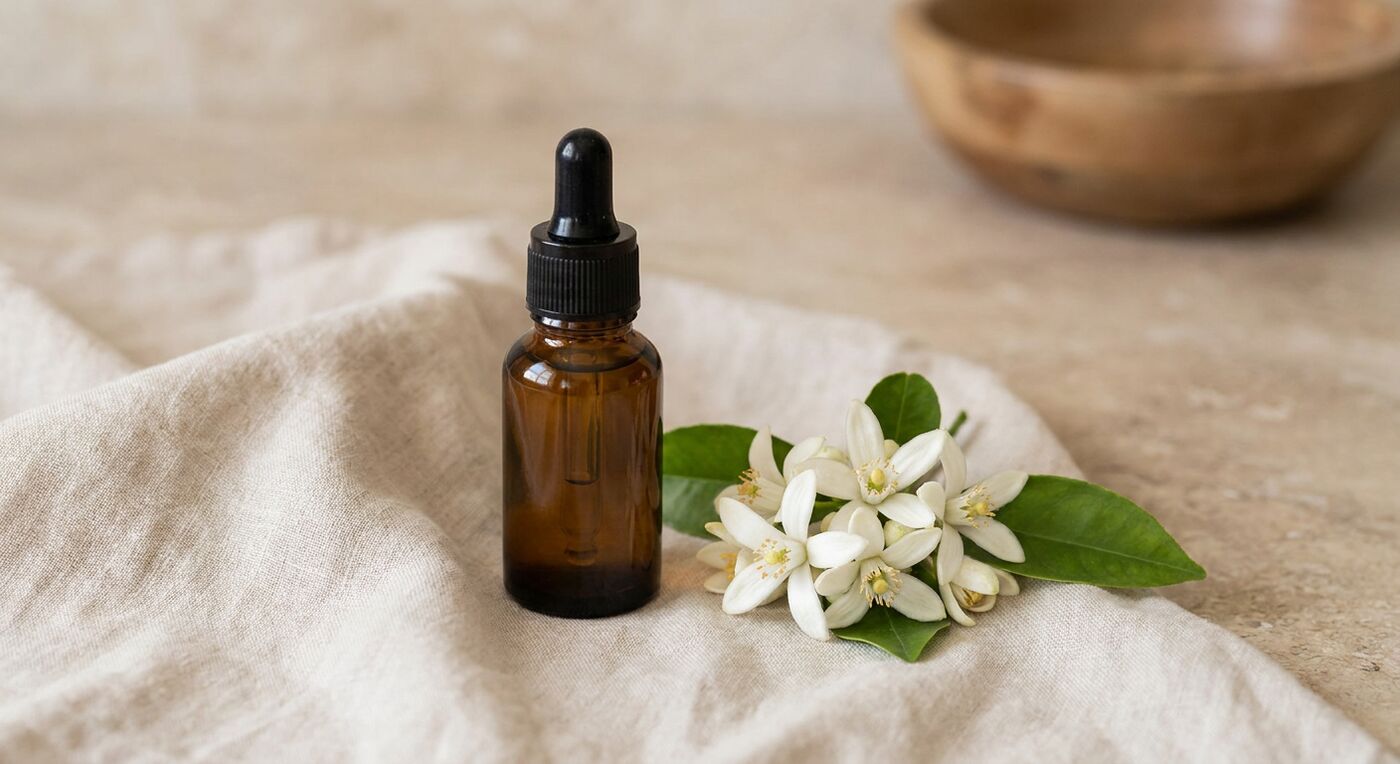
Essential oils occupy an odd place in skincare. They are sold as the gentle option, and they are responsible for a meaningful share of contact allergy cases. Lavender, tea tree, citrus oils and neroli all appear on both lists.
What they reasonably do
Neroli, distilled from bitter orange blossom, is mildly antimicrobial and pleasant to use. As a fragrance in a well-made product it is unobjectionable for most skin. What it does not do is tighten pores, reverse wrinkles, or replace a moisturiser. Essential oils are volatile aromatic compounds, not treatments.
Dilution is not optional
Undiluted essential oil applied directly to skin is the most common cause of reactions blamed on natural products. If you use them at home, keep them to roughly one percent of a carrier oil, about one drop per teaspoon, and patch test on the inner forearm for a day before anything goes near your face.
- Citrus-derived oils can increase sun sensitivity, so keep them out of daytime products.
- Skip them entirely with eczema, rosacea, or any history of reacting to fragrance.
- "Unscented" often means a masking fragrance was added. "Fragrance-free" is the term that means what you want.
When a home routine has run out of road
If a persistent concern is what sent you looking for a botanical fix, an oil is unlikely to resolve it. Texture, tone and pigment changes respond to treatments that work below the surface, and a professional assessment will save months of experimenting.